TL;DR
Faux leather is more durable, flexible, and reliable for book covers than bonded leather. Bonded leather may look similar at first but often cracks and peels with regular use. For journals, Bibles, and textbooks, faux leather is the better long-term choice.
Choosing the right material for a book cover affects more than appearance. It determines how the book feels, performs, and holds up over time. This is especially important for items handled daily, such as planners, journals, and religious texts. Many buyers researching faux leather vs bonded leather focus on price or looks but overlook durability and binding performance. That can lead to early failure. This matters. A poorly chosen cover can peel, crack, or separate within a short time. This guide explains how each material performs in real bookbinding applications so you can make an informed decision.
What is faux leather and bonded leather in books
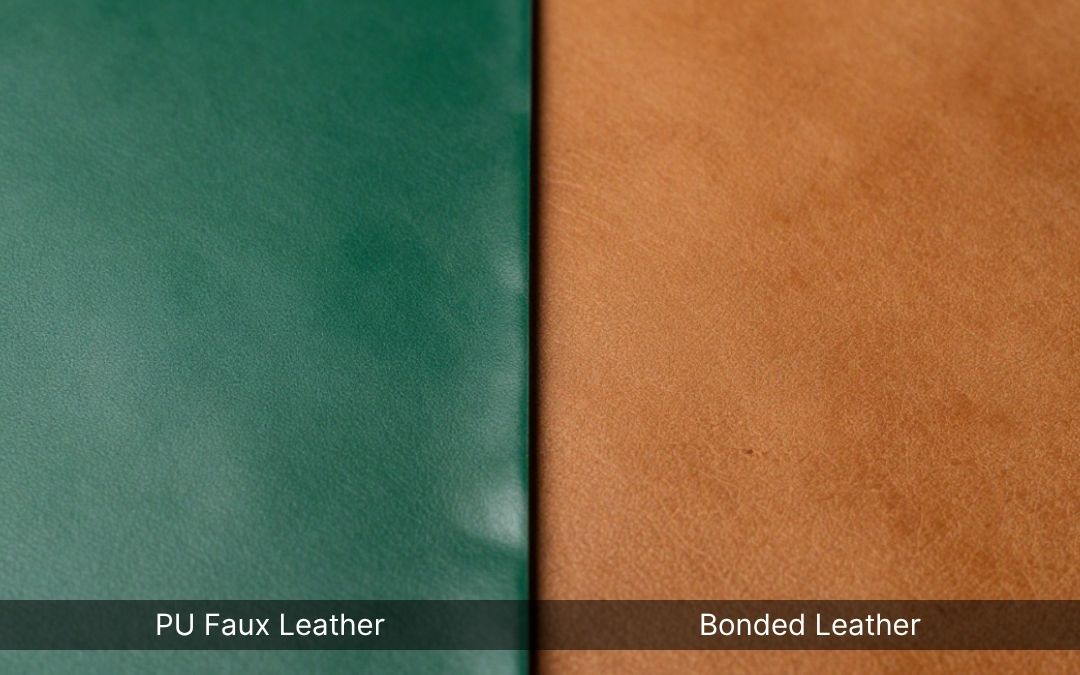
To understand performance, you need to know what each material is. What is faux leather in bookbinding terms? It is a synthetic material, often called PU leather, made by applying a polyurethane coating to a fabric backing to create a flexible and consistent surface. A faux leather book cover is engineered to bend repeatedly without damage, which is essential for books opened often.
Bonded leather is very different. It is made by combining shredded leather scraps with adhesives and pressing them onto a paper or fiber backing. While it contains some real leather, it behaves like a composite material. A bonded leather book cover typically has a thin surface coating designed to mimic real leather grain.
This difference matters in bookbinding. Faux leather book binding allows for flexibility and strong adhesion to boards and spines. Bonded leather is more rigid and prone to surface breakdown. Over time, especially with frequent use, bonded leather struggles to maintain its structure. Faux leather provides a more stable and predictable result for most applications.
Durability and lifespan in real use
Durability is where the gap becomes clear. Many people ask is faux leather durable, especially for books that see daily use. The answer is yes, particularly with high-quality PU materials. Faux leather book binding durability comes from its ability to resist cracking, moisture, and abrasion.
Bonded leather does not perform as well under stress. Its layered construction weakens over time, especially when exposed to heat, humidity, or repeated bending. This often leads to bonded leather peeling books, where the surface flakes away and reveals the backing underneath.
If you are considering how long faux leather will last, most high-quality options can last several years with proper care. In contrast, bonded leather may begin to fail within one to three years in high-use conditions. This makes faux leather the more reliable choice for long-term use.
For items like textbooks or a faux leather journal cover, durability is critical. Faux leather maintains its structure and appearance longer, while bonded leather often requires replacement sooner.
Flexibility and binding performance
Book covers must support constant movement. Faux leather book binding performs well because it remains flexible without losing strength. It wraps tightly around spines and boards, allowing books to open smoothly and retain their shape.
Bonded leather is less adaptable. Its rigidity leads to stress at fold points, especially along the spine. Over time, this causes cracking and separation. This is a common failure point in bonded leather book cover designs.
A synthetic leather book cover made from PU or similar materials works well across different binding styles. It adheres better to adhesives and resists delamination. This improves the overall lifespan of the book.
In practical use, faux leather offers better handling. Books open flatter, feel more consistent, and maintain their structure longer. Bonded leather often loses these qualities as it ages.
Appearance and aging over time
Both materials are designed to mimic real leather, but they age differently. Faux leather maintains a consistent look because its surface is engineered to resist wear. This is why a vegan leather book cover often retains its color and texture even with regular handling, making it a reliable choice for frequently used books.
Bonded leather tends to degrade visually. The surface coating can fade, crack, or peel, leading to an uneven appearance. This is especially noticeable on frequently used items like journals or planners.
Initially, bonded leather may feel closer to real leather due to its fiber content. However, this advantage fades quickly. As the surface breaks down, it becomes rough and inconsistent. Faux leather remains smooth and uniform.
For professional or everyday use, consistency is often more important than initial feel. Faux leather delivers a cleaner, longer-lasting appearance compared to bonded alternatives.
Disadvantages of faux leather
Despite its advantages, there are some disadvantages of faux leather to consider. One is breathability. Faux leather does not allow air to pass through like natural leather, which can affect comfort in certain applications. For book covers, this is usually a minor issue.
Another factor is environmental impact. Faux leather is plastic-based, which raises concerns about sustainability. However, newer materials are improving in this area, and some options use recycled content.
Faux leather also does not develop a patina like real leather. For users who value aging characteristics, this may be a drawback. However, in bookbinding, consistency and durability are often more important.
Overall, while faux leather has limitations, they are generally less significant than the durability issues associated with bonded leather.
Choosing the right book cover material
A proper book cover materials comparison should focus on real-world use. Consider how often the book will be handled, where it will be stored, and how long it needs to last. For high-use items, durability and flexibility are key.
Faux leather book cover options, including PU leather book cover designs, provide a strong balance of cost and performance. They are widely used for journals, planners, and textbooks because they hold up well over time.
Bonded leather may seem appealing due to its lower cost and slight resemblance to real leather. However, the shorter lifespan often offsets the initial savings. In most cases, replacing a bonded leather book cover costs more in the long run.
For applications like a faux leather journal cover or other frequently handled books, faux leather is the more practical choice. It delivers consistent performance and better long-term value.
Final thoughts on faux leather vs bonded leather
When comparing faux leather vs bonded leather, the differences are clear in real use. Faux leather offers better durability, flexibility, and appearance over time. Bonded leather, while initially attractive, tends to crack and peel with regular handling.
For book covers, where performance matters, faux leather is the stronger option. It supports a wide range of applications and provides reliable results across different environments.
For expert-level insight and personalized solutions, reach out to the Ecological Fibers team today.
Key Takeaways
- Faux leather is more durable and better suited for frequent book use
- Bonded leather often cracks and peels, especially at the spine
- Faux leather book binding provides better flexibility and structure
- Bonded leather book cover options have shorter lifespans
- Faux leather offers consistent appearance and long-term value
- Choosing the right material depends on use, but faux leather is usually the better investment